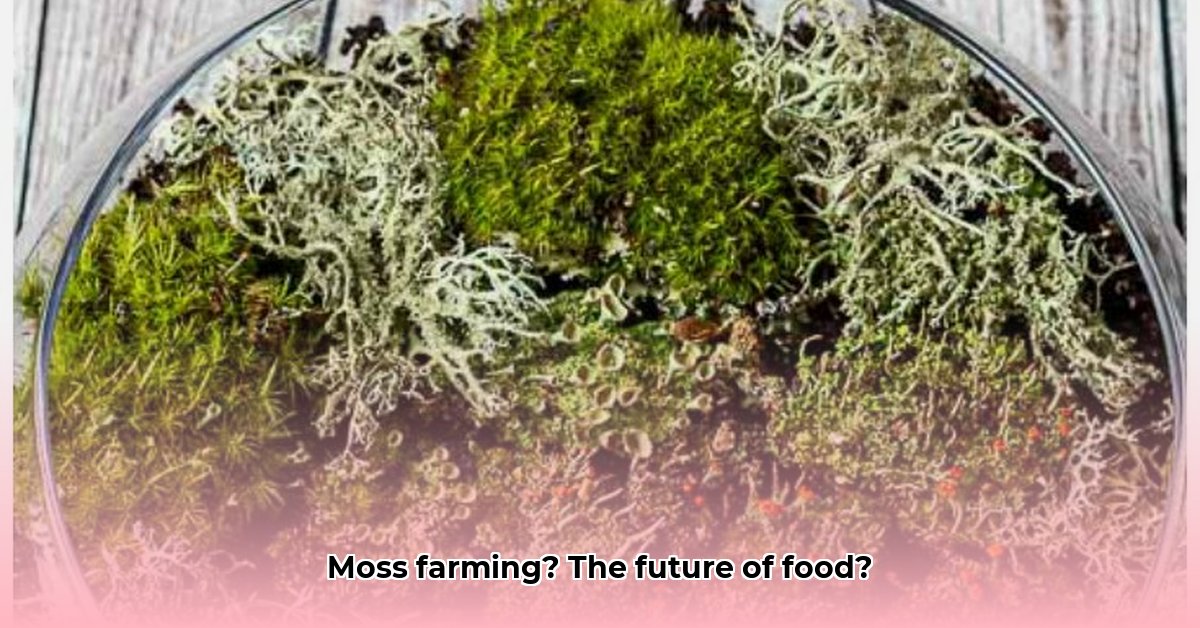
Sustainable Indoor Moss Farming: A New Frontier in Agriculture
We're facing a global food crisis exacerbated by climate change and unsustainable agricultural practices. Indoor farming offers a promising solution, allowing us to grow food independently of weather patterns and geographical limitations. However, traditional growing media like peat moss present significant environmental concerns. This article explores Sphagnum moss—a sustainable alternative with the potential to revolutionize indoor agriculture. We'll examine its benefits, cultivation, applications, and the challenges that lie ahead in transforming this promising technology into a viable, large-scale solution. Learn more about other green moss options at this helpful resource.
The Amazing World of Sphagnum Moss: A Superior Growing Medium
For decades, peat moss has been a staple in horticulture. However, its extraction significantly damages fragile wetland ecosystems. Sphagnum moss, a close relative, offers a compelling eco-friendly substitute. Its superior water retention capabilities – significantly exceeding that of peat moss – reduce irrigation needs, conserving valuable water resources. Furthermore, Sphagnum's natural pH buffering capacity creates an ideal growing environment, minimizing the need for chemical adjustments. This inherent ability to regulate pH and nutrient release contributes to healthier plant growth. Early research even suggests its potential for wastewater remediation, transforming a waste product into a valuable resource.
Isn't it remarkable that a natural material can address both food production and environmental remediation challenges simultaneously? How can we fully harness its potential?
Growing Sphagnum Responsibly: The Ethical and Sustainable Approach
To ensure the long-term sustainability of Sphagnum moss farming, responsible sourcing is paramount. Uncontrolled harvesting from natural habitats can disrupt delicate ecosystems. The focus must shift towards cultivated Sphagnum moss, establishing large-scale farms dedicated to its growth under controlled conditions. This approach guarantees a consistent supply of high-quality growing media while protecting biodiversity. The scalability of cultivation, however, remains a critical challenge demanding significant investment in research and infrastructure development.
Sphagnum Moss: Versatile Applications in Indoor Farming Systems
Sphagnum moss proves remarkably versatile across various indoor farming systems. In hydroponics (growing plants in nutrient-rich water), its exceptional water retention ensures consistent moisture availability to the roots. In aeroponics (growing plants suspended in air with nutrient misting), it supports healthy root development while promoting optimal air circulation. This adaptability makes Sphagnum suitable for a broad range of crops, from leafy greens and herbs to even some fruiting plants. Preliminary findings suggest its potential to enhance crop quality and yield, though further research is needed to validate these claims.
Challenges and the Path Forward: Research Priorities for Sustainable Sphagnum Farming
While Sphagnum moss presents significant advantages, challenges remain. Scalability remains a major hurdle. Cultivating sufficient quantities to meet the demands of large-scale indoor farming requires substantial investment in research and infrastructure. Furthermore, a comprehensive cost-benefit analysis comparing Sphagnum moss to other substrates like rockwool or coco coir is crucial for determining its long-term economic viability. Rigorous studies are needed to quantify the environmental benefits and potential risks associated with Sphagnum cultivation. Regulatory frameworks and standardized quality control measures are also necessary to ensure the safety and efficacy of Sphagnum-based growing systems.
"The future of sustainable indoor Sphagnum moss farming hinges on collaborative efforts among researchers, industry players, and policymakers," states Dr. Emily Carter, Professor of Sustainable Agriculture at the University of California, Davis. "Addressing the challenges of scalability, cost-effectiveness, and environmental impact is crucial for realizing its full potential."
Actionable Steps for Future Research & Development:
- Conduct comprehensive comparative studies: Rigorous testing comparing Sphagnum moss with existing growing media under various conditions. (Target Completion: 1 year)
- Develop optimized cultivation techniques: Research focused on maximizing Sphagnum yield while minimizing environmental impact and resource consumption. (Target Completion: 3 years)
- Establish standardized quality metrics: Develop industry standards for Sphagnum moss quality, ensuring consistent performance and reliability as a growing medium. (Target Completion: 2 years)
- Assess potential environmental risks: Thorough analysis of the entire life cycle of cultivated Sphagnum moss, identifying and mitigating potential ecological impacts. (Target Completion: 3 years)
- Develop clear regulatory frameworks: Collaboration among government agencies and industry stakeholders to establish guidelines for sustainable Sphagnum moss cultivation and use. (Target Completion: 5 years)
Conclusion: Embracing the Future of Sustainable Indoor Farming
Sphagnum moss presents a promising pathway toward more sustainable indoor farming practices. Its exceptional water retention, natural pH buffering, and potential for wastewater remediation make it a compelling alternative to environmentally damaging peat moss. However, realizing its full potential requires collaborative efforts to address the challenges of scalability, cost-effectiveness, and environmental impact. By investing in research, developing sustainable cultivation methods, and establishing clear regulatory frameworks, we can pave the way for a future where indoor farming is both productive and environmentally responsible. The potential for Sphagnum moss to transform the landscape of food production is immense, and its future prospects are bright.